For nearly twenty years, Nai Qala has been working alongside communities, convinced that lasting change must be built with communities themselves. This experience has only reinforced one belief: projects truly take root when communities take ownership of them, develop their own capacities and commit to their children’s future.
A school building that is still in use twenty years later. Teachers who continue working in their own villages. Parents who contribute towards keeping classes open after external funding ends. These are some of the signs that a development project has taken root.
Nai Qala (NQA) has worked with remote communities in Afghanistan for nearly two decades. Our experience has taught us that lasting change cannot simply be delivered from outside. It takes time to build trust, develop local capacity and give people the opportunity to see what is possible. It also means recognising that communities have strengths and resources of their own.
Looking after the school buildings
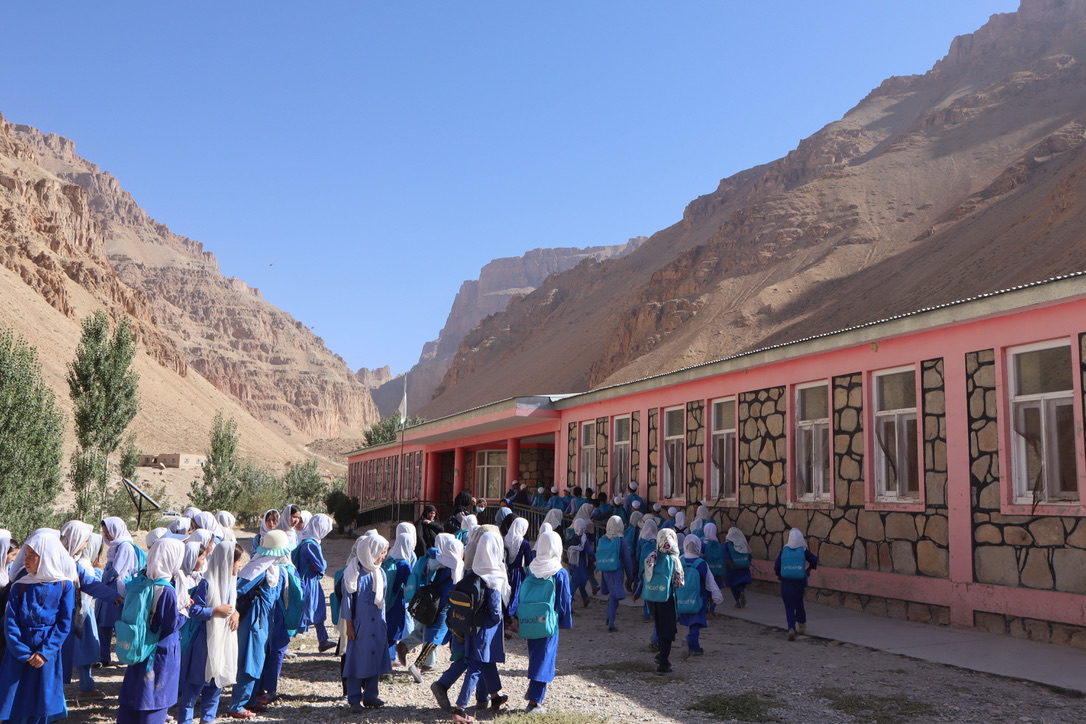
NQA has involved communities in its projects from the start. Every school building we have built is still standing and still used by children, including those that are nearly twenty years old. Good construction is part of the reason. But so is the commitment of the people who look after them.
Community committees collect small contributions for repairs and upkeep. If a window breaks, a door handle comes off or the walls need repainting, people sort it out together. The sums are small, but these everyday efforts matter. They show that families see the buildings as something that belongs to their community and is worth maintaining for their children.
When parents see the difference
In the early years, our meetings with parents were fairly basic. Teachers held monthly meetings, passed on information and asked families to support their children’s schooling. Parents listened, but it was rarely a real conversation.
That changed gradually. As children attended NQA’s classes, parents began to notice differences at home. Shy children became more confident. They talked more about what they were doing, greeted people politely and spoke up for themselves. Parents started sharing these observations with teachers and other villagers. Some families had relatives visiting from the city who noticed that their children were just as confident, articulate and respectful as children growing up in urban areas.
This meant a great deal to parents. The gap between village and city life had sometimes seemed to define what their children could achieve. Now they could see that their children could learn and thrive where they lived. This change in how parents viewed their children’s prospects was important. Their support for education was no longer based only on what teachers or NQA told them. They had seen the benefits themselves.
Investing in people who stay
Buildings need looking after, and classes need teachers. A central part of NQA’s approach is therefore to invest in people from the communities where we work.
Our teachers are recruited locally. They know the language, culture and circumstances of the children they teach. They understand the families and the challenges they face. And they stay in their communities.
NQA supports them through training, guidance and regular engagement. Over time, they develop their teaching skills and confidence, but also become experienced and trusted members of their communities. Their contribution extends beyond the classroom: they maintain relationships with families, encourage parents to stay involved and help keep education on the community’s agenda.
This is an important part of sustainability. When a project or funding period ends, the knowledge and experience developed by local teachers do not disappear with it. They remain in the villages, along with the relationships they have built.
Communities keeping classes open
Perhaps the clearest sign of what this approach can achieve is that about a dozen of NQA’s community classes are now run by the communities themselves. After years of working together, families have decided that these classes are worth keeping open and are contributing towards the teachers’ modest salaries.
The amounts are small, particularly in communities where money is scarce. But the commitment is meaningful. Parents are beginning to see education as something worth investing in, and their contributions help keep learning opportunities available for local children.
This does not mean communities can meet every need on their own. In some of the most underserved parts of Afghanistan, continued financial and technical support remains essential if children are to have access to education. Expecting families with very limited resources to carry the full cost would be unrealistic.
For NQA, sustainability does not mean withdrawing support and leaving communities to cope. It means working alongside people over time, investing in local skills and relationships, and creating the conditions for communities to take an increasingly active role in maintaining what has been achieved.
The real measure of our work is not just what we build or the number of children who attend our classes. It is what remains afterwards: buildings that communities look after, teachers who continue to serve their villages, and parents who are prepared to invest in their children’s education. These are the foundations on which lasting change can grow.