
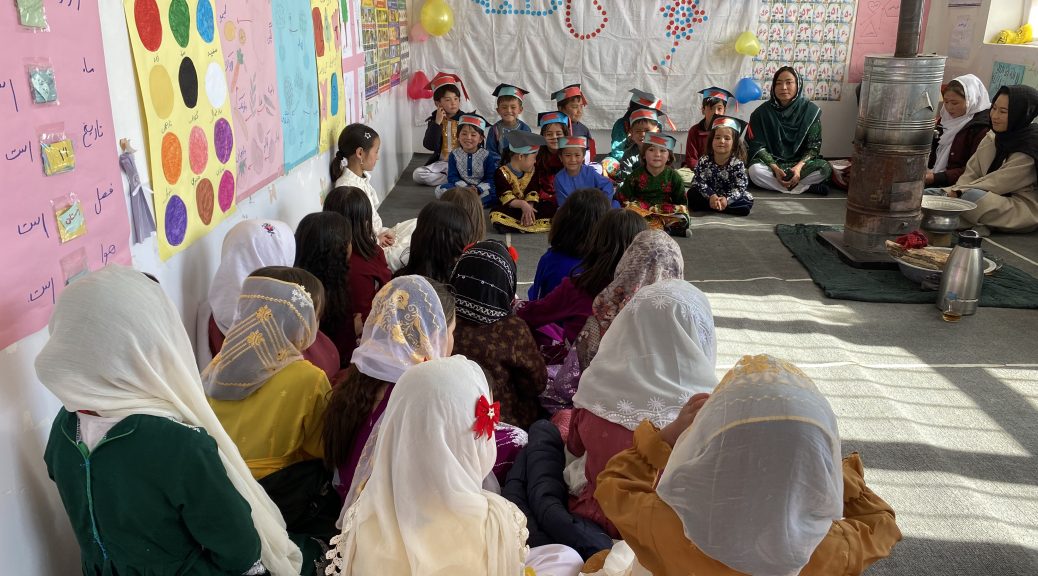
Community-led education programs can transform not only children’s learning but also family and community life.
Children as learners and change agents
Nai Qala Association’s (NQA) programs prepare children for school while building confidence and curiosity.
“My daughter, who attended a NQA class, has been top of her class since entering fourth grade in the public school. Teachers now trust her to take attendance and manage the class in their absence.” A mother in Bamyan shared.
Beyond grades, children influence their households in tangible ways. Another parent explained: “After attending preschool, one child became a real ‘hygiene ambassador’ at home, insisting that his father buy soap and reminding everyone to wash their hands after using the toilet.”
These stories show that education extends beyond the classroom, shaping behaviours, attitudes, and daily routines within families. Parents adopt gentler, more supportive practices, and children’s new skills create positive ripple effects among siblings and peers.
Communities taking ownership
Perhaps the most remarkable impact of NQA’s programs is the active role of communities in sustaining education. In one remote village, close to a community where a NQA class takes place, children were walking three hours each day to reach school. Inspired by their neighbor village, the local community responded by hiring a teacher themselves and paying the salary from their own funds. A large international organisation provided books, and children happily completed grade one in their own village.”
In other villages, parents also contributed financially to retain teachers, reflecting a strong commitment to education and local problem-solving. Local teachers, deeply embedded in their communities, address sensitive issues, including violence at home, with strategies built on trust and daily engagement, interventions that would be difficult for external actors to implement.
Integrating health and wellbeing
NQA is also piloting early nutrition education in Daikundi, teaching parents how to feed their children using locally available nutrient-rich foods. Families are already applying these lessons at home, improving children’s diets and wellbeing. This holistic approach, combining learning with health, strengthens both educational outcomes and family resilience.
Localisation in practice
The experience of NQA highlights the importance of localisation in education programs. While international organisations may face mobility or security constraints, locally rooted organisations maintain continuous presence, trust, and accountability. As one community member explained: “We hope the program continues for several years. Locally rooted organisations like NQA are the ones who can sustain impact in our villages.”
This trust, combined with the community’s own investment, ensures that programs continue to thrive even in the most remote and challenging contexts.
Looking ahead
Community-based education is more than teaching children; it is strengthening families, fostering local ownership, and building resilient communities. NQA’s model demonstrates that when communities and local organisations lead the way, education is not just a service; it becomes a catalyst for lasting change.